The Evolution of the Pistol Over Time: From Early Mechanisms to Modern Ergonomics

The Evolution of the Pistol Over Time: From Early Mechanisms to Modern Ergonomics
The pistol has undergone a remarkable transformation since its earliest forms in the 16th century. From cumbersome, slow-loading firearms to today’s precise, ergonomically designed models, the technology, materials, and purpose of pistols have evolved dramatically. In modern times, the pistol is not only a weapon but also a study in mechanics, design, and human adaptation. Here’s a look at how the pistol has developed through the centuries—from early ignition systems to the ergonomic innovations of today.
The First Handguns
The earliest pistols appeared in Europe during the 1500s as a compact evolution of the musket. Known as wheel lock pistols, they used a spark-generating mechanism to ignite gunpowder. These firearms were complex and expensive to produce, making them symbols of status among nobility and officers rather than practical weapons for common soldiers.
Later came the flintlock pistol, which dominated the 17th and 18th centuries. It was more reliable and faster to reload, though still dependent on loose powder and lead balls that required careful handling. During this period, pistols were often used in duels and as sidearms for cavalry officers.
Industrialization and the Rise of the Revolver
The 19th century marked a turning point in pistol technology. With industrialization came new manufacturing methods, and the invention of the revolver mechanism revolutionized handguns. Samuel Colt’s patented revolver of 1836 allowed multiple shots to be fired in succession without reloading—a major advantage in both military and civilian contexts.
The revolver quickly became widespread in the United States and Europe, becoming an icon of both law enforcement and frontier life in the American West. It was durable, easy to operate, and could be mass-produced. Around the same time, ammunition evolved from loose powder and ball to self-contained cartridges, combining bullet, powder, and primer in a single unit. This innovation made firearms safer, faster, and more reliable to use.
The Shift to Semi-Automatic Pistols
By the late 19th and early 20th centuries, pistol design took another leap forward with the development of semi-automatic pistols. Instead of a rotating cylinder, these firearms used a magazine that automatically chambered a new round after each shot, allowing for faster and more efficient firing.
One of the most influential designs of this era was the Browning M1911, created by American inventor John Browning. Adopted as the standard sidearm of the U.S. military for over 70 years, the M1911 set the benchmark for reliability and performance. Meanwhile, European manufacturers such as Luger and Walther developed their own models, which became popular among military and police forces worldwide.
Læs også:
Materials and Precision in the 20th Century
After World War II, attention turned to reliability, weight, and accuracy. New materials like aluminum and later polymer (a type of durable plastic) made pistols lighter without sacrificing strength. Manufacturers such as Glock, Sig Sauer, and Heckler & Koch introduced models that combined simple mechanics with enhanced safety and user-friendliness.
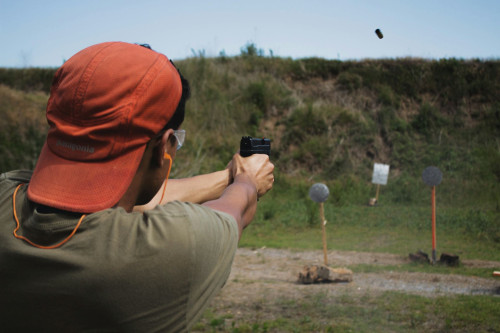
Advancements in sights, trigger mechanisms, and recoil systems improved accuracy and reduced shooter fatigue. The pistol became a tool that could be tailored to the individual user—whether for military, law enforcement, or competitive shooting.
Modern Ergonomics and Customization
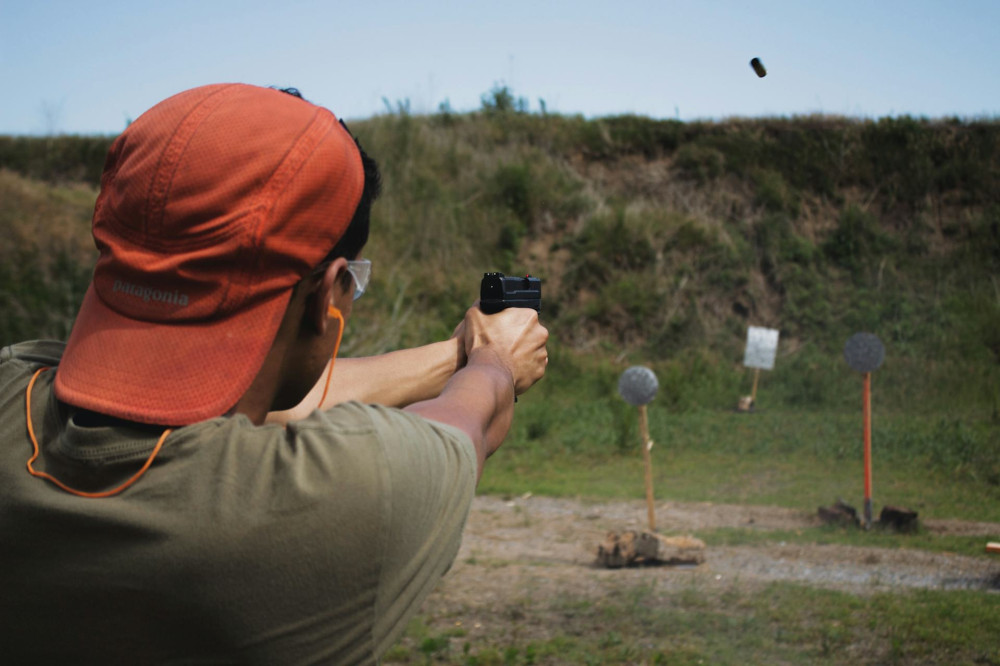
Today, pistol design is closely tied to ergonomics and user experience. Modern pistols are engineered with attention to grip shape, weight distribution, and trigger sensitivity. Many models feature interchangeable backstraps and grips to accommodate different hand sizes and shooting styles.
Digital technology and 3D printing have opened new possibilities for customization and production. Some manufacturers are experimenting with smart sights and sensors that record shooting data, helping users refine their technique.
Safety has also become a central focus. Contemporary pistols often include multiple built-in safeties, and research is underway into biometric locking systems that allow only authorized users to fire the weapon.
From Weapon to Precision Tool
Although the pistol has historically been a weapon, it is now used in many contexts as a precision instrument—in sport shooting, training, and research. Its evolution reflects both technological progress and society’s changing attitudes toward firearms and safety.
From the first spark-driven mechanisms to today’s lightweight, ergonomic designs, the history of the pistol tells a story of human ingenuity—how technology, design, and functionality can merge to refine even the simplest of tools over time.
Læs også: